What Are Trading Signals in Cryptocurrency
Trading and speculation are among the most common activities in crypto. Many participants want actionable information, which has led to the rise of trading signals.
Why Traders Use Trading Signals
In a fast-moving crypto market, reacting quickly can be crucial. Trading signals are prepared recommendations that suggest entry and exit levels. They help traders navigate information overload and improve the odds of successful trades.
Who Uses Signals
Signals are used by beginners looking for guidance and by experienced traders aiming to refine their strategies. Exchanges and funds increasingly integrate crypto signals into their algorithms, improving algo-trading and expanding opportunities.
Types of Trading Signals
There are two main types: manual and automatic.
Manual Signals
Manual signals come from human analysts. They rely on experience, intuition, and market knowledge, including scalping or medium-term views. These are often shared in Telegram channels, forums, or paid communities.
Automatic Signals
Automatic signals come from algorithms. They use technical indicators and are often provided by trading bots or platforms. Indicator-based signals can help with position averaging, risk control, and building size gradually.
As algo-trading becomes more accessible, automated signals are increasingly popular. They reduce human bias and run 24/7, especially in automated crypto trading.
What Signals Include
Most signals share a similar structure and mix technical and fundamental inputs.
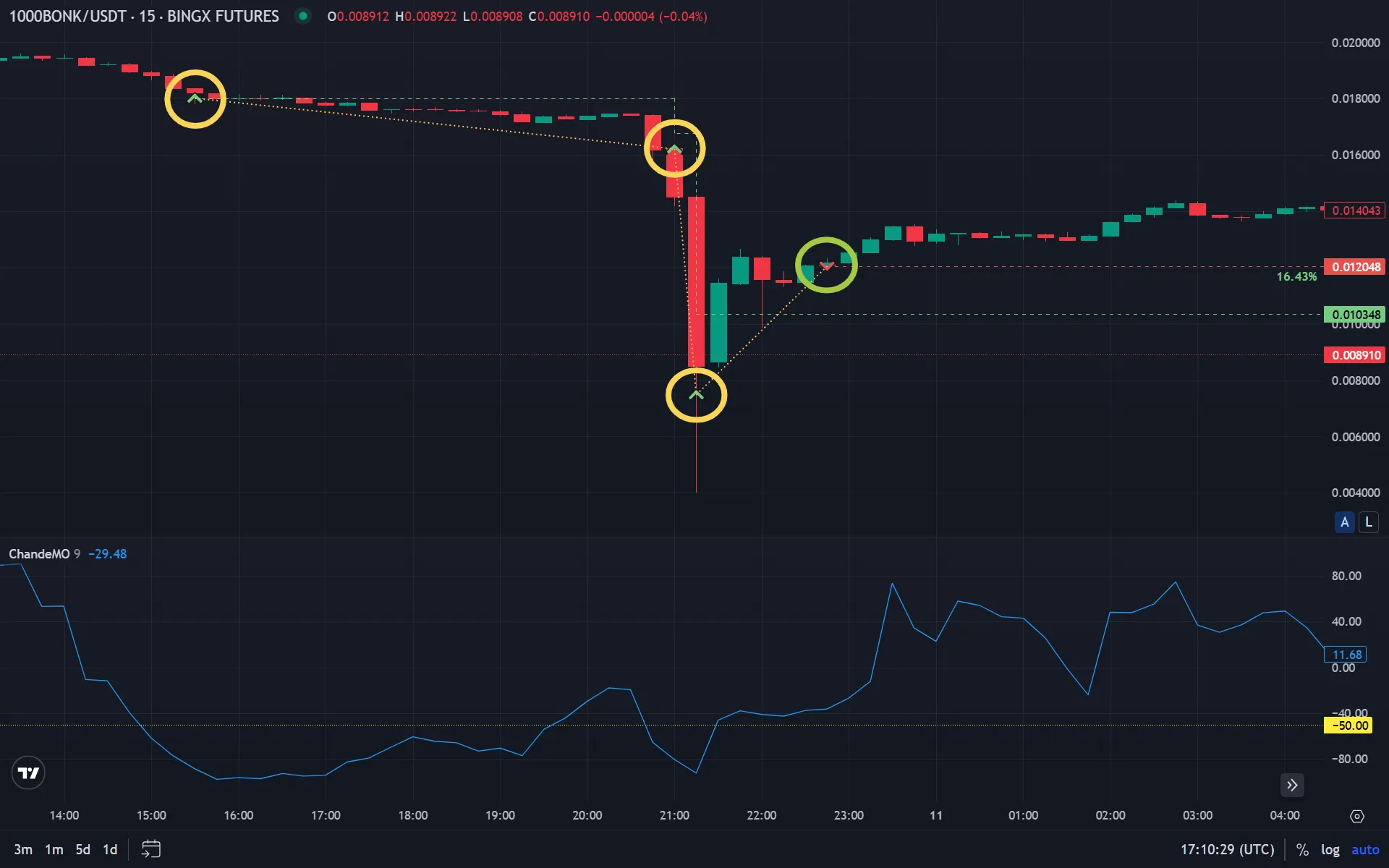
Entry, Stop-Loss, and Targets
A solid signal specifies an entry — a price or range at which to open a position. This is based on market context, including technical and fundamental data.
Next comes the stop-loss — the level at which the trade is closed to limit losses. It is a key risk-management tool, especially in volatile crypto markets. A sensible stop helps protect capital and trade with more confidence.
Finally, profit targets — levels at which to take profit. Signals often include one or several targets, allowing partial take-profit. This helps capture upside, especially in strong trends or positive news.
Indicators and Rationale
Signals are built on technical and fundamental factors. Technically, common tools include RSI, MACD, moving averages, and support/resistance. They help analyse price, trends, overbought/oversold conditions, and suggest entries and exits.
Fundamental analysis covers news, events, project updates, partnerships, and new features. A major investor’s statement or a top exchange listing can justify a buy signal. Volume also matters, confirming trend strength and entry zones.
In algo systems, automated methods (e.g. machine learning, statistical models) are used. Such signals are often faster and more consistent than manual analysis. To check effectiveness, it is important to backtest strategies.
Where to Find Trading Signals
Signals can be found in analytical communities, Telegram channels, bot platforms, and analytics sites. When choosing a source, consider reputation, track record, and whether signal history is verifiable. Many offer free signals with optional paid tiers.
Advantages and Risks
Signals help traders make more informed decisions using analysts’ or algorithms’ work.
Advantages: They save time — no need to run deep analysis or watch news 24/7. They can improve entry quality, especially when based on solid analysis, including in scalping or spot trading.
Risks: No signal guarantees success. Crypto is volatile and sensitive to macro, regulation, and sentiment. Trades can lose even with a signal. In automated trading, signals are executed without human oversight, which adds risk.
Source quality matters. Many schemes promote “best” signals that are misleading or useless. Check the provider’s reputation and avoid relying on a single source. Even with good signals, risk management and position sizing are essential.
Signals can also be delayed, especially when shared in messengers or social media. By the time they are published, the opportunity may be gone.
How to Use Signals Sensibly
Good use of signals requires discipline, understanding of the market, and risk management. Signals are a tool, not a “get rich” button.
Choose reliable sources: proven analysts, trading teams, or algo platforms. Prefer channels with transparent history, performance stats, and explanations. Avoid unknown channels promising “guaranteed profits.”
Apply each signal correctly: respect entry, stop-loss, and targets. Do not “improve” levels without experience; straying from the plan often hurts results.
Manage capital carefully. Even good signals can lose. Avoid putting the whole account into one trade. Use position sizing and stops to limit drawdowns.
Signals can be used manually or via bots. If using bots, configure them properly and test that signals are executed correctly and on time. Automation is convenient but adds operational and execution risk, especially in volatile markets.
Adapt to market regime. In a strong uptrend, focus on bullish signals; in sideways markets, consider shorter-term or scalping setups. Adjust usage to the current phase.
Do not follow every signal blindly. Build your own view, review past entries, and learn to tell strong from weak signals. That supports both performance and growth as a trader. For testing signal effectiveness, backtesting strategies is essential, and the RSI indicator is one common source of signals. For volume and entry zone analysis, the Money Flow Index (MFI) can be helpful. For automated trading, trading bots on Bybit can be used.
Summary
Trading signals are recommendations for entry and exit based on technical or fundamental analysis. They save time and help beginners, but don’t guarantee profits. It’s important to verify sources, practice risk management, and not rely blindly on a single channel.
FAQ
Are trading signals legal?
Yes, it’s a legitimate tool. However, be cautious of scam schemes promising guaranteed profits. Check the source’s reputation and signal history.
Are crypto signals paid or free?
Both exist. Free signals are often used to attract to paid channels. Quality doesn’t always depend on price — checking stats is important.
How to verify signal effectiveness?
Backtesting is used: signals are applied to historical data and results are reviewed. Keeping a trade journal and comparing results with signals is also useful.
Can trading be automated with signals?
Yes, many use bots that automatically open trades based on signals from Telegram or API. But the bot needs proper configuration and a backup plan for failures.
Are signals suitable for beginners?
Yes, they help learn and save time on analysis. But understanding the logic behind signals, not just copying them, is important. Basic risk management must also be learned.
Disclaimer
This blog is for informational purposes only. It does not constitute financial or investment advice.
Trading cryptocurrencies and other financial instruments involves high risk. You may lose all your funds.
The author is not responsible for any financial losses resulting from the use of information from this blog.