Staking is a way of passive income on cryptocurrencies with Proof-of-Stake (PoS) consensus algorithm. You lock your coins in the network to support blockchain operations and receive rewards for it.
In 2026, staking remains one of the most popular ways to earn in crypto. In this guide — everything a beginner needs to know: from coin selection to yield calculation and risk assessment.
What is Staking in Simple Terms
Staking is an analogue of a bank deposit in the cryptocurrency world. You “freeze” your coins for a certain period, and the network pays you interest for supporting the blockchain.
How it Works (using Ethereum as an example)
- You buy ETH on an exchange
- Send to staking (via exchange, pool, or your own node)
- Network uses your ETH to validate transactions
- You receive rewards (~3-5% annually in ETH)
Proof-of-Stake vs Proof-of-Work
| Parameter | PoW (Bitcoin) | PoS (Ethereum, Cardano) |
|---|---|---|
| How it works | Mining on GPUs/ASICs | Validation via staking |
| Energy consumption | High (like a country) | Low (1000x less) |
| Entry threshold | Expensive equipment | From 1 coin (depends on network) |
| Yield | Depends on price and difficulty | Fixed % annually |
Important: Bitcoin cannot be staked — it uses Proof-of-Work. Wrapped tokens (wBTC, renBTC) are simply tokens on other blockchains, backed by BTC. They don’t provide Bitcoin staking yields, but can be used in DeFi for yield (e.g., liquidity provision).
Which Coins Can Be Staked in 2026
Top 10 Staking Coins (by Yield and Reliability)
| Coin | Annual Yield | Min. Amount | Lock-up Period | Risk |
|---|---|---|---|---|
| Ethereum (ETH) | 3-4% | 0.01 ETH (via pools) | None (flexible) | Low |
| Cardano (ADA) | 3-4% | 1 ADA | None | Low |
| Solana (SOL) | 6-8% | 0.01 SOL | None | Low |
| Polkadot (DOT) | 5-16% | 1 DOT | 28 days | Medium |
| Cosmos (ATOM) | 8-15% | 1 ATOM | 21 days | Medium |
| Avalanche (AVAX) | up to 7.65% | 25 AVAX | 2 weeks | Low |
| Polygon (POL) | 3-4% | 1 POL | None | Low |
| Algorand (ALGO) | ~4% (automatic) | 1 ALGO | None (rewards for holding) | Low |
| Tezos (XTZ) | 4-5% | 1 XTZ | 7 days | Low |
| VeChain (VET) | 2-3% (in VTHO gas token) | 1 VET | None | Low |
Data is approximate, exact yield depends on validator, exchange, or pool.
Data as of March 2026. Sources: StakingRewards.com, official project websites.
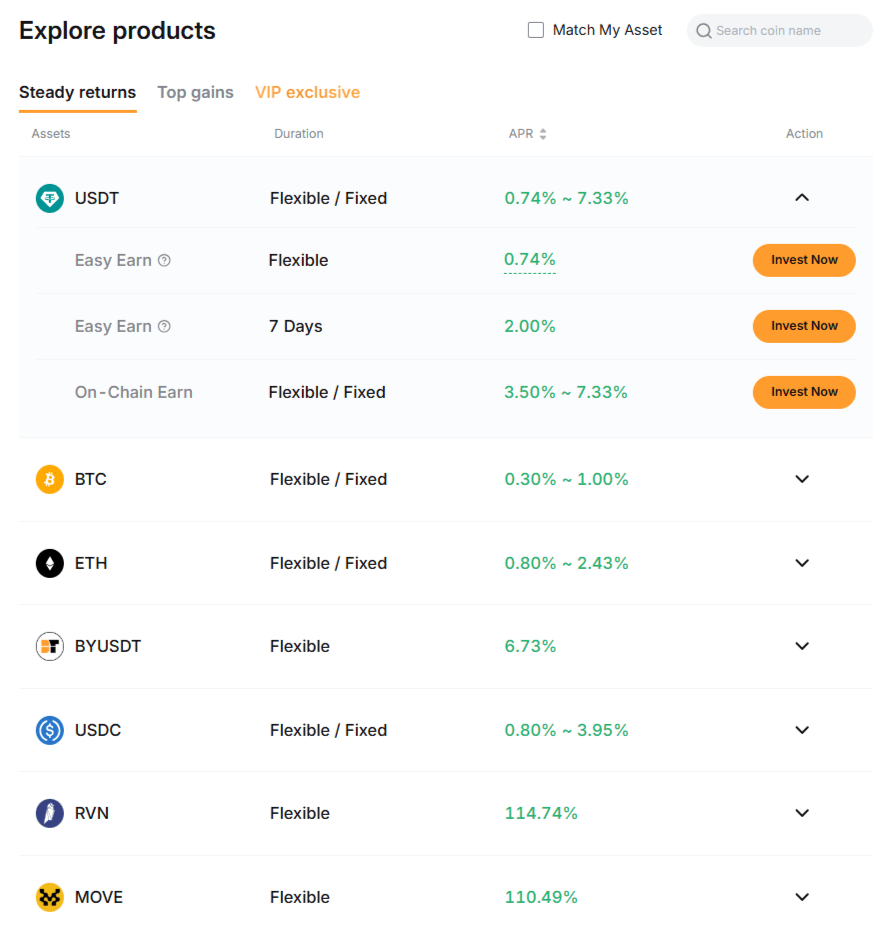
What to Look for When Choosing a Coin
-
Annual Yield (APY):
- 3-5% — conservative (ETH, ADA, POL)
- 5-8% — medium (SOL, AVAX)
- 8-16% — high (DOT, ATOM)
- 16%+ — high risk (new projects)
-
Lock-up Period:
- None — can withdraw anytime
- 7-28 days — need to wait for unlock
- 90+ days — high risk (can’t sell on dip)
-
Minimum Amount:
- ETH: 32 ETH for own node, from 0.01 ETH for pools
- Most coins: from 1 coin
- Some: high threshold (e.g., 25 AVAX)
-
Project Risk:
- Top-20 by cap — low risk
- Top-100 — medium risk
- Below top-200 — high risk
Staking Methods
Staking Method Comparison
| Parameter | Exchange | Pool | Own Node |
|---|---|---|---|
| Min. amount | From 0.01 coins | From 1 coin | 32 ETH (~$100,000) |
| Yield | 1-2% below network | Full (minus 5-10% pool fee) | 100% of network |
| Withdrawal | Flexible (depends on exchange) | Depends on pool | 28 days (ETH) |
| Complexity | Low (2 clicks) | Medium | High |
| Risks | Exchange hack | Smart contract | Slashing, downtime |
| For whom | Beginners, <$1000 | $1000-$10,000 | $50,000+, tech-savvy |
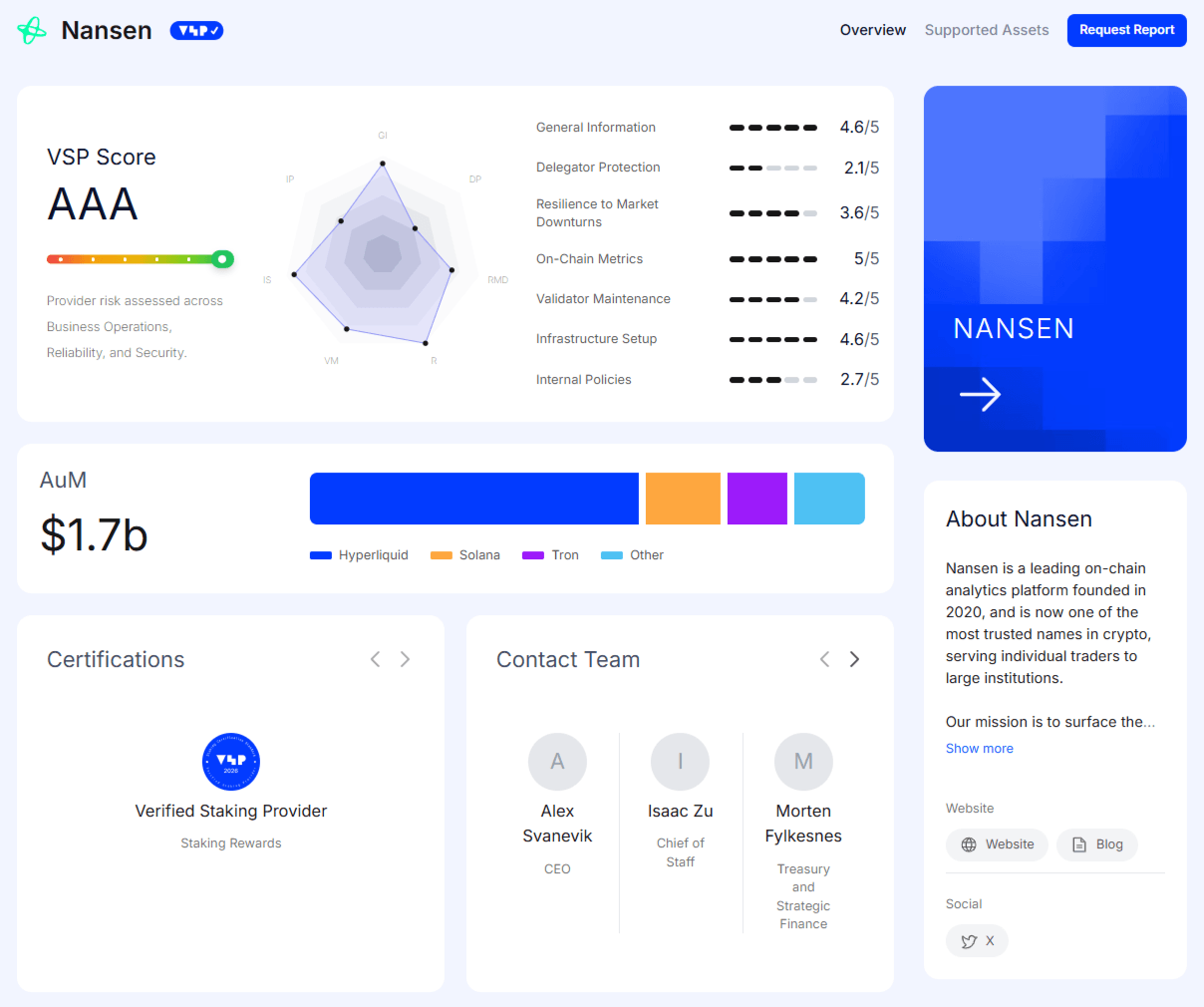
1. Exchange Staking (Simplest)
How it works: You send coins to staking directly on the exchange (Bybit, Binance, Bitget).
Pros:
- Simplicity (2 clicks)
- No minimum amount
- Can withdraw anytime (flexible staking)
- No gas fees
Cons:
- Exchange fee (10-20% of rewards)
- Exchange hack risk
- Lower yield (exchange takes commission)
Yield: 1-2% below network rate
For whom: Beginners, small amounts (< $1000)
2. Pool Staking
How it works: You join other stakers in a pool and share rewards proportionally to your contribution.
Pros:
- No minimum amount
- Can withdraw (depends on pool)
- Full network yield (no exchange fee)
Cons:
- Pool fee (5-10%)
- Need to trust pool operator
- Smart contract risk (for DeFi pools)
Popular pools:
- ETH: Lido (stETH), Rocket Pool (rETH)
- SOL: Marinade Finance, Jito
- DOT/ATOM: Pools in wallets (Polkadot.js, Keplr)
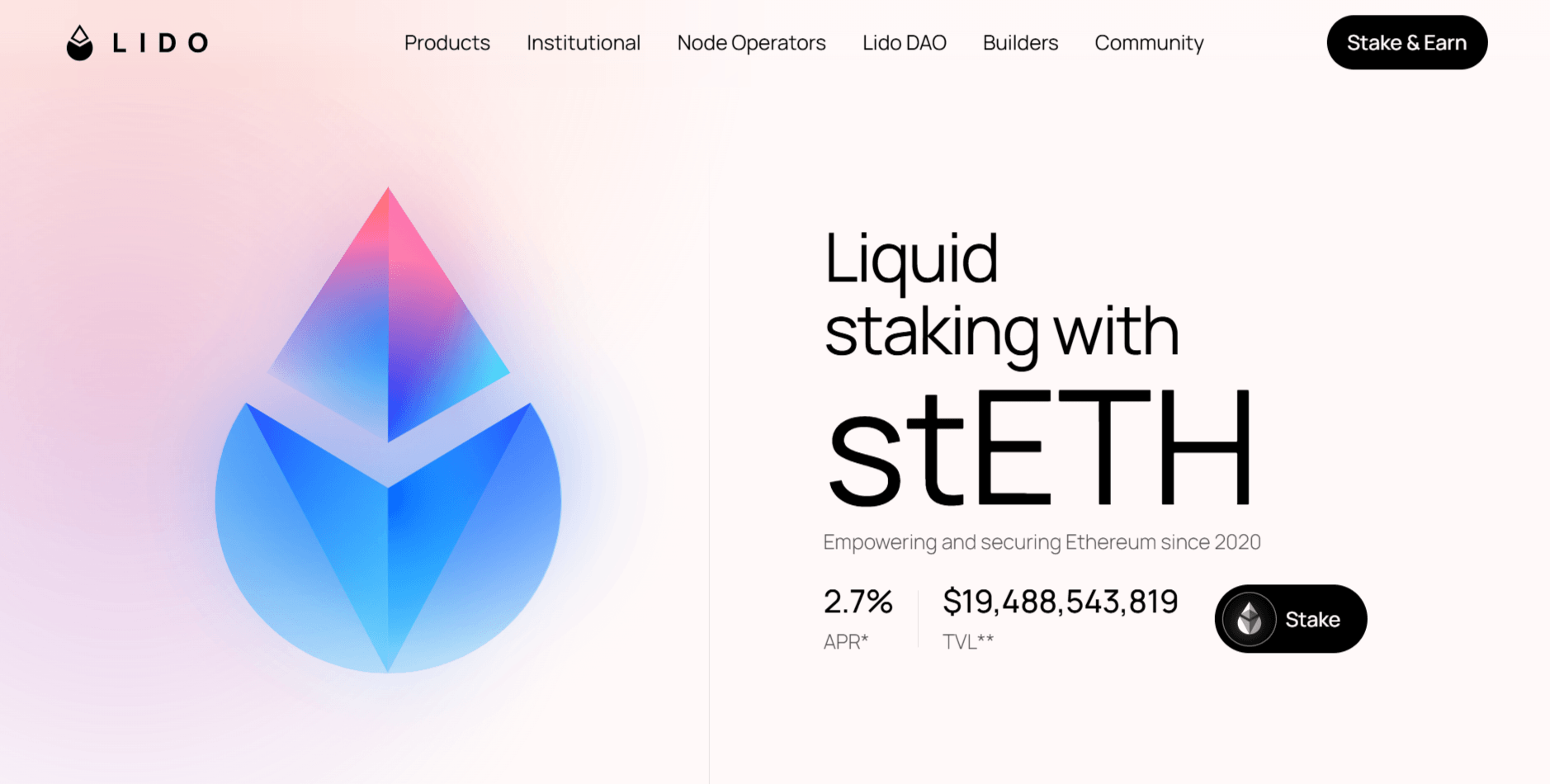
For whom: Medium amounts ($1000-$10,000), experienced users
3. Own Node (For Advanced)
How it works: You run your own validating node and receive full rewards.
Pros:
- Full yield (100% of rewards)
- Full control over coins
- Direct network support
Cons:
- High entry threshold (e.g., 32 ETH ≈ $100,000)
- Technical knowledge required
- Slashing risk (penalty for downtime)
- Need to pay for server
For whom: Large amounts ($10,000+), technical users
How to Start Staking: Step-by-Step Guide
Step 1: Choose a Coin
Criteria:
- Top-50 by cap (low risk)
- 5%+ annual yield
- Flexible withdrawal (no lock-up)
Recommendations for beginners:
- ETH — most reliable, 3-4% annually
- SOL — high yield, 6-8% annually
- ADA — no lock-up, 3-4% annually
Step 2: Choose Method
For beginners: Exchange (Bybit, Bitget, BingX)
Why:
- Simplicity (2 clicks)
- No gas fees
- Can withdraw anytime
Step 3: Buy Coins
- Register on exchange
- Buy coin (e.g., ETH for USDT)
- Transfer to spot wallet
Step 4: Send to Staking
Example on Bybit:
- Open “Earn” → “Staking”
- Select coin (e.g., ETH)
- Click “Stake Now”
- Enter amount (e.g., 1 ETH)
- Confirm
Done! Rewards will start accruing in 1-3 days.
Referral links:
Yield Calculation
Formula
Annual Reward = Amount × APY / 100Examples
Example 1: ETH, $3000, 4% APY
- Amount: 1 ETH ($3000)
- APY: 4%
- Per year: $3000 × 0.04 = $120 (0.04 ETH)
- Per month: $10 (0.0033 ETH)
Example 2: SOL, $1500, 7% APY
- Amount: 10 SOL ($1500)
- APY: 7%
- Per year: $1500 × 0.07 = $105 (0.7 SOL)
- Per month: $8.75 (0.058 SOL)
Example 3: ATOM, $2000, 12% APY
- Amount: 200 ATOM ($2000)
- APY: 12%
- Per year: $2000 × 0.12 = $240 (24 ATOM)
- Per month: $20 (2 ATOM)
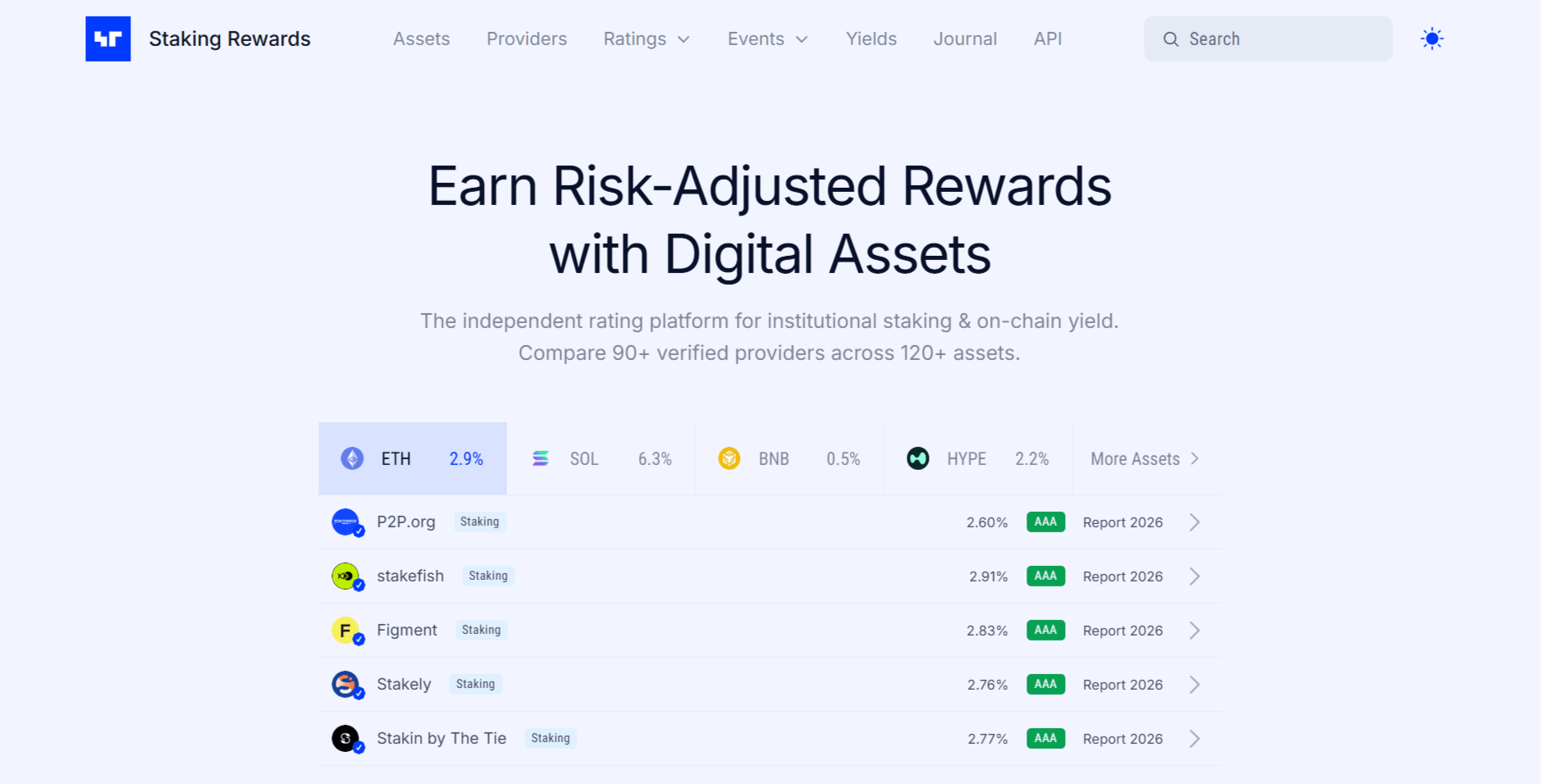
Staking Calculator
Use online calculators:
Staking Risks
1. Price Volatility
Risk: Coin price falls faster than rewards accrue.
Example:
- Bought 1 ETH for $3000
- Received 0.04 ETH ($120) in a year
- But ETH fell to $2000
- Result: $2000 + $120 = $2040 (loss $960)
How to protect:
- Stake only what you’re willing to hold 1+ years
- Choose low-risk coins (top-20)
- Diversify (not all in one coin)
2. Lock-up Period
Risk: Can’t withdraw coins when price falls.
Example:
- Staked DOT for 28 days
- A week later DOT fell 30%
- Can’t sell until lock-up ends
How to protect:
- Choose coins without lock-up (ETH, ADA, SOL)
- Or use flexible exchange staking
3. Slashing (for own nodes)
Risk: Penalty for downtime or improper validation.
Example:
- Launched ETH node (32 ETH)
- Server down for 24 hours
- Penalty: 0.1 ETH ($300)
How to protect:
- Use reliable servers (99.9% uptime)
- Set up monitoring and alerts
- Or use pools (no slashing risk)
4. Exchange or Pool Hack
Risk: Loss of all coins on hack.
Example:
- Staked ETH on FTX exchange
- Exchange went bankrupt
- Lost all coins
How to protect:
- Choose top exchanges (Bybit, Binance, Bitget)
- Don’t keep everything on one exchange
- For large amounts — own node or cold wallet
Staking vs Other Earning Methods
| Method | Yield | Risk | Liquidity | For whom |
|---|---|---|---|---|
| Staking | 3-16% annually | Low | High | Conservative |
| Trading | -100% to +500% | High | High | Experienced traders |
| Lending | 5-15% annually | Medium | Medium | Medium risk |
| Yield Farming | 20-100% annually | High | Low | Experienced DeFi |
| Airdrops | 0-1000% one-time | Medium | Low | Hunters |
Conclusion: Staking is the most conservative method with predictable yield.
Conclusion
Staking in 2026 is a reliable way of passive income on Proof-of-Stake cryptocurrencies.
Main rules:
- Choose top-20 coins (low risk)
- Use exchanges for small amounts (< $1000)
- Avoid lock-ups > 28 days
- Diversify (3-5 coins)
- Keep records for taxes
Optimal strategy for beginner:
- 50% ETH (3-4% annually, low risk)
- 30% SOL (6-8% annually, medium risk)
- 20% ADA or ATOM (3-15% annually, medium risk)
Expected yield: 4-8% annually in dollars + coin price appreciation.
Useful resources:
Before starting staking, we recommend studying tokenomics basics for project risk assessment, risk management for capital management, and DCA strategy for gradual coin purchases.
FAQ
How much to start?
From $10-50 via exchange. For own ETH node — 32 ETH (~$100,000).
Can I withdraw early?
Depends on coin and method. ETH, ADA, SOL — anytime. DOT, ATOM — need to wait 21-28 days.
What happens if price falls?
You’ll get less in dollars, but coin amount grows. If you don’t sell — loss is unrealized.
Do I need to pay taxes?
Yes, in most countries. Rewards are income (13-15% in some CIS countries, 10-37% in US, rates vary in EU).
What’s the most reliable option?
ETH staking via pool (Lido, Rocket Pool) or top exchange (Bybit, Binance).
Disclaimer
This blog is for informational purposes only. It does not constitute financial or investment advice.
Trading cryptocurrencies and other financial instruments involves high risk. You may lose all your funds.
The author is not responsible for any financial losses resulting from the use of information from this blog.