Important: This checklist is a “junk/not junk” filter, not a buy recommendation. For deep analysis, see Fundamental Analysis: 15-Minute Checklist.
Why this matters:
According to 2025 data, over 80% of new crypto projects turn out to be failures or scams. Average retail investor loss on such projects is $500-2000. A simple 10-minute checklist helps avoid 90% of problems.
Real-world example:
In January 2025, “CryptoMoon” project raised $10M from investors. Two weeks later, the team disappeared with the money. Post-factum analysis showed:
- Anonymous team (nicknames instead of real names)
- Empty GitHub (last commit 2 years ago)
- Fake partnerships (Binance and Coinbase didn’t confirm collaboration)
- Tokenomics: 80% tokens to team without vesting
All these red flags are visible in 5 minutes. The checklist below will help avoid such situations.
Quick Check (10 Points)
1. Project Team
Where to check: Website, LinkedIn, Twitter, Crunchbase
Good:
- Public names with photos and LinkedIn links
- Industry experience (blockchain, finance, tech companies)
- Active social media (posts 2-3 times per week)
- Conference participation, interviews, podcasts
Red flag:
- Anonymous team (only nicknames like “CryptoKing69”)
- No LinkedIn or empty profiles without experience
- Fake partnerships (mentions without confirmation)
- Team of 1-2 people without technical specialists
How to check:
- Open “Team” section on project website
- Find 2-3 key people on LinkedIn
- Check experience: did they work in known companies?
- Google names + “scam” or “fraud” (just in case)
Example of good team:
Arbitrum (ARB):
- CEO: Steven Goldfeder, PhD from Princeton
- Previously: researcher at Princeton University, blockchain publications
- Team: 50+ people, LinkedIn profiles
- Investors: a16z, Paradigm, Lightspeed
Example of bad team:
SafeMoon (2021):
- Anonymous founders (nicknames)
- No LinkedIn or fake profiles
- Result: project turned out to be a scam, investors lost $200M
2. Product and Technology
Where to check: Website, GitHub, documentation, testnet/mainnet
Good:
- Working product (testnet or mainnet)
- GitHub active (commits in last month)
- Clear documentation (not just “to the moon”)
- Real users (reviews, metrics)
Red flag:
- Only Whitepaper without code
- GitHub empty or last commit > 6 months ago
- Unclear what project does (vague formulations)
- No testnet or public demo version
How to check:
- Find GitHub link (usually in website footer)
- Check “Commits” tab: any activity in last month?
- Check number of developers: 1-2 people or team?
- Open documentation: is product clearly described?
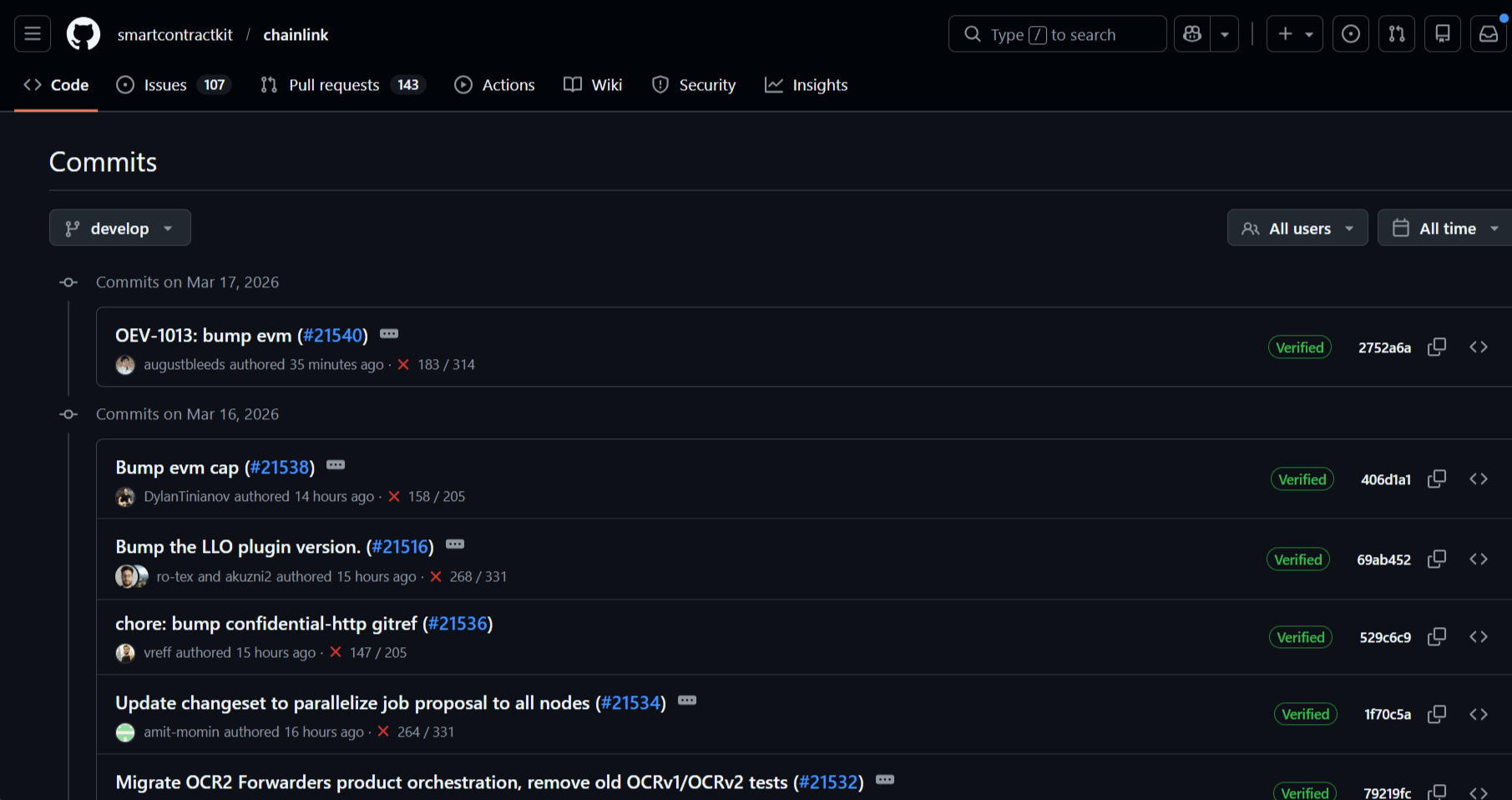
Example of good product:
Chainlink (LINK):
- GitHub: 1000+ commits in last month
- Team: 20+ developers
- Documentation: 500+ pages with code examples
- Product: working since 2019, integrated in 1000+ projects
Example of bad product:
BitConnect (2016-2018):
- GitHub: empty or fake repositories
- Documentation: only marketing slogans
- Product: “trading platform” without proof of work
- Result: $2.5B scam
3. Tokenomics
Where to check: CoinMarketCap, Token Unlocks, Whitepaper (Token Distribution section)
Good:
- Max Supply specified (predictable emission)
- Circulating Supply > 50% (most already on market)
- Team < 20% with 2+ year vesting
- Burn or staking mechanics exist
Red flag:
- Max Supply not specified (infinite emission)
- Circulating Supply < 20% (many tokens in reserve)
- Team 30%+ without vesting (can sell anytime)
- No utility (token only for speculation)
How to check:
- Open CoinMarketCap → “Tokenomics” section
- Check Circulating / Max Supply ratio
- Open Token Unlocks → check unlock schedule
- Find “Token Distribution” section in Whitepaper
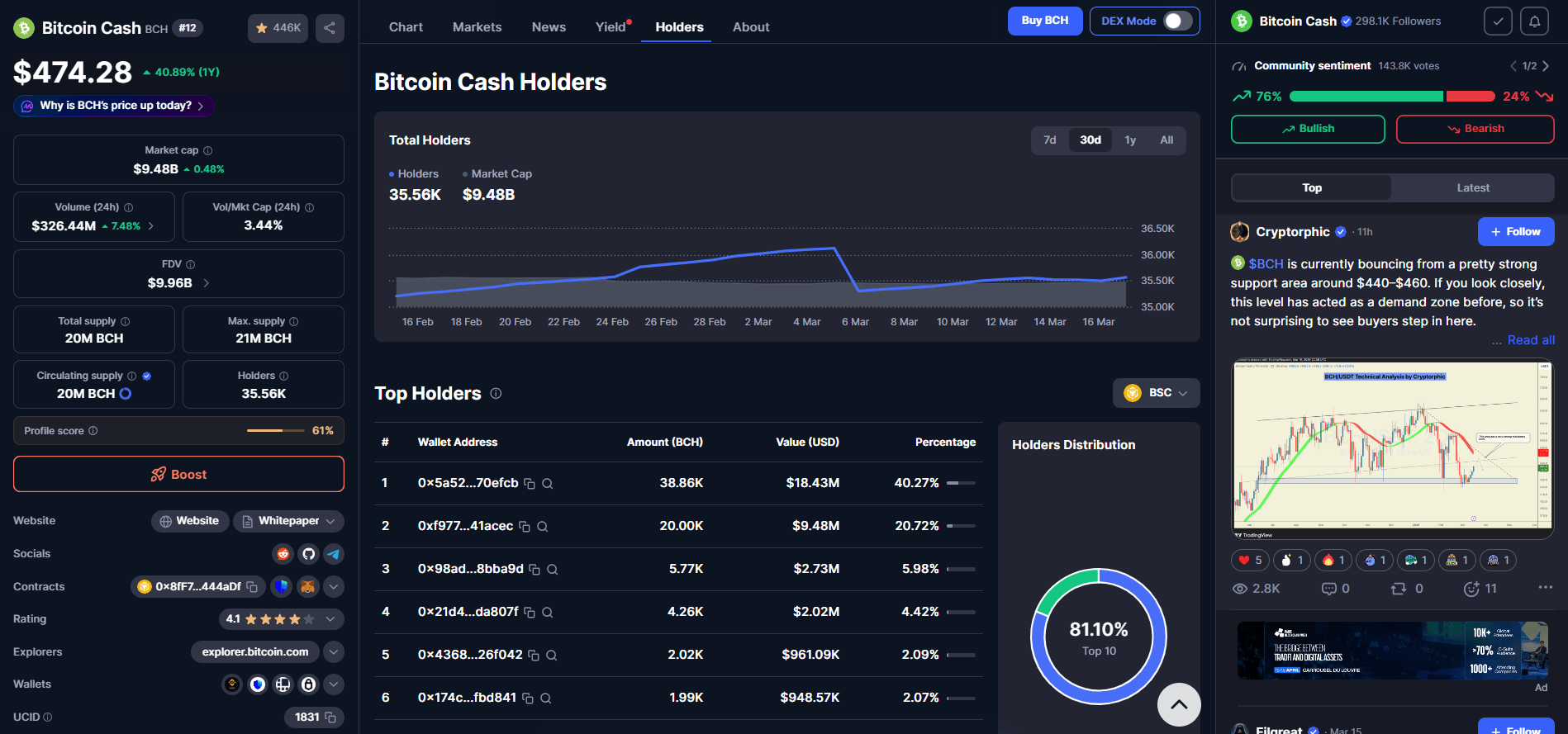
Example of good tokenomics:
Ethereum (ETH):
- Max Supply: no limit, but there’s burn (deflationary model)
- Circulating: 100% (all tokens in circulation)
- Team: 0% (distributed via ICO in 2014)
- Utility: gas payment, staking, DeFi
Example of bad tokenomics:
FTX Token (FTT, 2022):
- Max Supply: 350M (specified)
- Circulating: 30% (70% in team reserve)
- Team: 70% without vesting
- Result: after crash FTT fell 99%, investors lost everything
Table: Optimal Tokenomics Values
| Parameter | Excellent | Normal | Risk |
|---|---|---|---|
| Circulating Supply | >80% | 50-80% | <50% |
| Team | <15% | 15-25% | >25% |
| Vesting | 3+ years | 2-3 years | <1 year |
| Inflation | <5% | 5-15% | >15% |
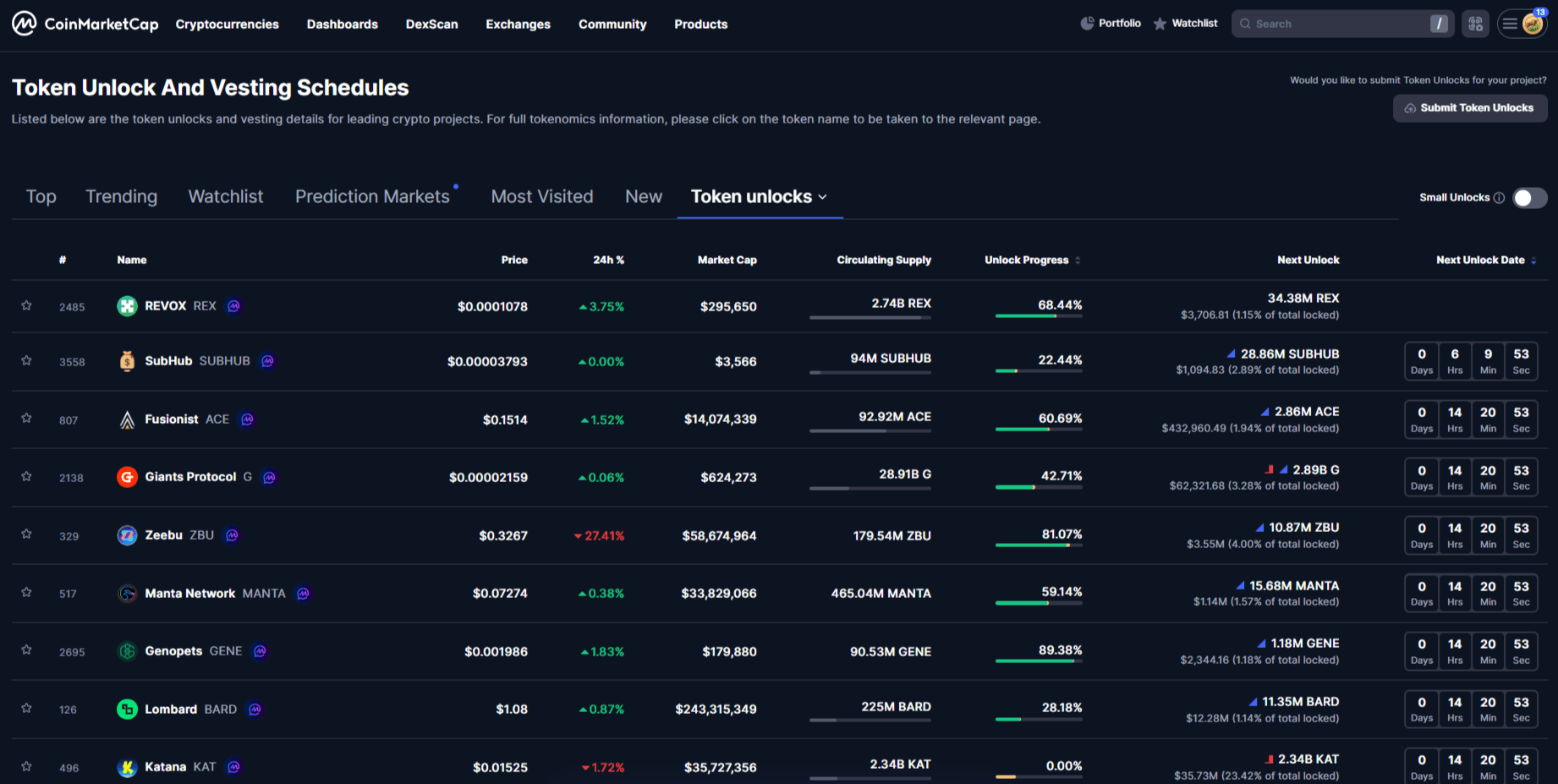
4. Liquidity
Where to check: CoinMarketCap, exchanges, DEX screeners
Good:
- Top-200 by capitalization
- 24h volume > $1M (easy to enter/exit)
- 3+ exchanges with USDT/USDC pairs
- DEX liquidity > $500,000
Red flag:
- Top-500+ by capitalization
- 24h volume < $100,000
- Only one exchange (especially unknown)
- No stablecoin pairs (only BTC/ETH)
How to check:
- CoinMarketCap → check Market Cap rank
- Check 24h trading volume
- Open “Markets” tab: which exchanges?
- For DEX: check DEXTools or DEXScreener
Example of good liquidity:
Solana (SOL):
- Market Cap: top-10
- 24h volume: $2-5B
- Exchanges: Binance, Bybit, Coinbase, Kraken (20+)
- Pairs: SOL/USDT, SOL/USDC, SOL/BTC, SOL/ETH
Example of bad liquidity:
“RandomShitCoin” (2025):
- Market Cap: top-2000
- 24h volume: $5,000
- Exchange: only PancakeSwap
- Pair: RSC/BNB (no stablecoins)
- Result: impossible to sell without 50%+ slippage
5. Community
Where to check: Twitter (X), Discord, Telegram, Reddit
Good:
- 10,000+ Twitter followers
- Active Discord/Telegram (100+ online)
- Real discussions, not just “to the moon”
- Support answers questions (not bots)
Red flag:
- Bots in comments (same-type posts “Great project!”)
- Telegram/Discord dead (< 50 online)
- Only “X100” and “next bitcoin” promises
- Critical questions banned (censorship)
How to check:
- Twitter: open posts, check comments
- Discord/Telegram: join, check online count
- Ask a question in chat: do real people answer?
- Google “[project] + scam” — what do forums say?
Example of good community:
Cardano (ADA):
- Twitter: 1.5M followers
- Discord: 50,000+ members, 1000+ online
- Reddit: 700,000+ subscribers (r/cardano)
- Discussions: technical, developments, partnerships
Example of bad community:
“SafeElonMoon” (2025):
- Twitter: 50,000 followers (but all bots)
- Comments: same-type “To the moon!”, “Great project!”
- Telegram: 5,000 members, but 90% don’t answer
- Result: inflated metrics, no real users
6. Partnerships
Where to check: Website (Partners section), Twitter, news
Good:
- Partnerships with known projects (top-50)
- Confirmations from partners (tweets, press releases)
- Real integration (not just logos on website)
- Long-term partnerships (6+ months)
Red flag:
- Partnerships with unknown projects (first time hearing)
- No confirmations from “partners”
- Binance/Coinbase logos without links
- Partnerships announced, but no details
How to check:
- Open “Partners” section on website
- Choose 2-3 “partners”, visit their websites
- Check if mentioned on partners’ websites
- Google “[project] + partnership + [partner]”
Example of real partnerships:
Polygon (MATIC):
- Partners: Disney, Starbucks, Meta, Nike
- Confirmations: press releases on partners’ websites
- Integrations: real products (NFT for Starbucks)
- Duration: 2+ years of collaboration
Example of fake partnerships:
“CryptoWorld” (2025):
- On website: Binance, Coinbase, PayPal logos
- On partners’ websites: no mentions
- On journalist request: Binance answered “not partners”
- Result: project closed a week after exposure
7. Investors
Where to check: Crunchbase, project website (Investors section), news
Good:
- Known VCs (a16z, Paradigm, Coinbase Ventures, Sequoia)
- Funding rounds A/B/C (not just seed/angel)
- Transparent investor structure (amounts, dates)
- Investors participate in development (advisors, connections)
Red flag:
- No information about investors
- Only “angel investors” without names
- Suspicious funds (no website, reputation)
- Investors announced, but no confirmations
How to check:
- Open Crunchbase → enter project name
- Check funding rounds: amounts, dates, investors
- Google investors: do they have website, portfolio?
- Check if they invest in other known projects
Example of good investors:
Optimism (OP):
- Investors: a16z, Paradigm, Sequoia, Coinbase Ventures
- Rounds: Seed ($3.5M), Series A ($178M)
- Dates: 2021-2022 (transparent history)
- Investor portfolio: Uniswap, Compound, FTX (before crash)
Example of bad investors:
“MoonShot Token” (2025):
- Investors: “Crypto Capital Fund”, “Blockchain Ventures”
- Investor websites: none or one-pager
- Portfolio: 5 projects, 4 of them scams
- Result: project turned out to be a scam, investors were fake funds
Table: Investor Reliability
| Tier | Investors | Examples | Reliability |
|---|---|---|---|
| Tier 1 | Top VCs | a16z, Paradigm, Sequoia | High |
| Tier 2 | Known funds | Coinbase Ventures, Binance Labs | Medium |
| Tier 3 | Regional funds | Local VC, Angel Group | Low |
| Tier 4 | Unknown | ”Crypto Fund”, “Blockchain Capital” | Very Low |
8. Roadmap and Progress
Where to check: Website (Roadmap section), Twitter, Discord
Good:
- Roadmap on website with specific dates
- Completed milestones marked (with links)
- Real deadlines (not “Q4 2025 — to the moon”)
- Regular updates (once every 1-2 weeks)
Red flag:
- No roadmap
- All milestones “in progress” for years
- Unrealistic promises (“1M users by Q3”)
- No progress reports (silence for months)
How to check:
- Find Roadmap on website (usually in menu or footer)
- Check which milestones completed, which not
- Compare dates: do promises match reality?
- Open Twitter/Discord: how often they update progress?
Example of good roadmap:
Arbitrum (ARB):
- Roadmap: published in 2021, updated quarterly
- Completed: testnet launch (2021), mainnet (2022), token (2023)
- Updates: weekly reports on Twitter
- Realism: deadlines met or shifted with explanation
Example of bad roadmap:
“MetaVerse Token” (2025):
- Roadmap: “Q1 2025 — launch, Q2 — 1M users, Q3 — Binance listing”
- Reality: Q2 2025, no product, 100 users
- Updates: last one 6 months ago
- Result: project abandoned, investors lost money
9. Competitors
Where to check: CoinMarketCap (similar projects), Google, Twitter
Good:
- Clear USP (how better than competitors)
- Market growing (room for everyone)
- Has advantage (technology, partnerships, team)
- Top-3 in niche
Red flag:
- 10+ clones with same product
- No differences from competitors (“we’re better” without explanation)
- Market dead (everyone left to other projects)
- 1-2 players dominate with 90% market
How to check:
- CoinMarketCap → find project category (DeFi, NFT, L2)
- Check top-10 projects in category
- Compare metrics: Market Cap, volume, users
- Google “[project] vs [competitor]” — what do they write?
Example of good positioning:
Optimism vs Arbitrum (L2 for Ethereum):
- Optimism: focus on simplicity, EVM-equivalence
- Arbitrum: focus on performance, more dApps
- Both: top-3 in L2 niche, different advantages
- Market: growing, room for both
Example of bad positioning:
“RandomDex” (2025):
- Competitors: Uniswap, SushiSwap, PancakeSwap (giants)
- USP: “we’re better” (without explanation)
- Differences: none (same DEX, but less liquidity)
- Result: project didn’t survive, liquidity went to competitors
10. Regulatory Risks
Where to check: News, regulators’ Twitter (SEC, CFTC), legal documents
Good:
- No lawsuits
- Project doesn’t fall under securities
- Jurisdiction with clear regulation (USA, EU, Singapore)
- Has legal opinion
Red flag:
- SEC lawsuit or warnings
- Project in country with strict regulation (China, Russia)
- Token classified as security
- Anonymous team (impossible to hold accountable)
How to check:
- Google “[project] + SEC” or “[project] + lawsuit”
- Check Twitter @SEC_News, @CFTC
- Open legal documents on website (if any)
- Find company jurisdiction (usually in website footer)
Example of good regulatory conditions:
Coinbase (COIN):
- Jurisdiction: USA (Delaware)
- Licenses: Money Transmitter in 50 states
- SEC: no lawsuits (public company)
- Transparency: 10-K, 10-Q reports (like public companies)
Example of bad regulatory conditions:
Binance (2023):
- Jurisdiction: offshore (Malta, Cayman Islands)
- SEC: $2B lawsuit (June 2023)
- CFTC: $100M fine
- Result: Binance left USA, users lost access
Final Verdict
Scoring:
- 8-10 points “Good”: Can consider deeper
- 5-7 points “Good”: Medium risk, need caution
- Less than 5 points “Good”: Skip
Important: Even if project passed checklist — it’s not a success guarantee. Always use risk management and don’t invest more than you can afford to lose.
Scoring example:
Checking new L2 project:
- Team: Public, experience in Ethereum Foundation
- Product: Testnet working, GitHub active
- Tokenomics: 40% to team (2 year vesting)
- Liquidity: Top-150, volume $5M
- Community: 50,000 Twitter, 5,000 Discord
- Partnerships: Polygon, Chainlink (confirmed)
- Investors: a16z, Paradigm
- Roadmap: Fulfilling promises
- Competitors: Arbitrum, Optimism dominate
- Regulatory: No lawsuits, USA jurisdiction
Result: 8 out of 10 “Good” → can consider deeper
Deep analysis:
For more detailed check, use extended 15-minute checklist, which includes tokenomics and on-chain metrics check. Also recommend studying tokenomics basics and risk management for risk assessment.
FAQ
How long does the check take?
10-15 minutes for quick checklist check. Deep analysis (with on-chain metrics, tokenomics) — 1-2 hours.
What if project didn’t pass checklist?
Skip. Better to miss an opportunity than lose money on a junk project. There are 20,000+ cryptocurrencies in the market — you’ll find something better.
Can I trust CoinMarketCap data?
Yes, but always double-check tokenomics on project’s official website and Token Unlocks. CoinMarketCap sometimes makes mistakes in circulating supply data.
What to do if team is anonymous?
This is a red flag. Some projects (like Bitcoin) started anonymously, but in 2026 this is rare and high risk. If team is anonymous — additional checks required (code audit, proof of reserves, community reputation).
Can I use checklist for NFT projects?
Yes, but with adjustments:
- Team: check artists’ portfolio
- Product: check collection, rarity, utilities
- Community: Discord more important than Twitter for NFT
- Partnerships: brands, celebrities, other NFT projects
How to check projects on DEX (Uniswap, PancakeSwap)?
Pay special attention to:
- Liquidity: is it locked (check on RugDoc.io)
- Tokenomics: can team mint tokens (mint function)
- Code: is there audit (Certik, Hacken)
- Community: real people or bots
Disclaimer
This blog is for informational purposes only. It does not constitute financial or investment advice.
Trading cryptocurrencies and other financial instruments involves high risk. You may lose all your funds.
The author is not responsible for any financial losses resulting from the use of information from this blog.